- Home
- Blog Articles
- The Seine River & the History of Paris
- 31 August 2026
- 122 Views
- General
A City Built by Its River
How the Seine Shaped Paris starts with simple geography. Paris didn't grow around the river by accident. Long before it became a capital, a monarchy, or a tourist destination, it was just a settlement. This settlement existed because of where the river bent, narrowed, and offered a way across. Nearly everything that followed traces back to that original geography. This includes the trade routes, the bridges, the neighborhoods, and eventually the postcard views.
Here's how the river shaped the city it now flows through.
Why Paris Was Built Around the Seine
The earliest settlement on the Seine took root on Île de la Cité. This small island sits in the middle of the river. Islands like this offered natural defense. Water on every side made the settlement harder to approach and easier to control. The river itself was also a ready-made trade route. It connected inland settlements to the coast without the need for built roads. Between the defensive advantage and the transport access, the location more or less chose itself.
Roman Lutetia
The Romans expanded the settlement into what they called Lutetia, building it up around the same island and riverbanks. Even under Roman rule, the city's layout stayed tied to the water. Builders positioned streets and structures around crossing points. The river remained the fastest way to move people and goods in and out of the settlement.
Medieval Paris: Trade, Bridges, and Growth
As Paris grew through the medieval period, the Seine became its main commercial artery. Merchants moved goods along the water. The bridges that connected the two riverbanks weren't just crossings. Shops and houses lined them, effectively turning the bridges into extensions of the marketplace. The city expanded outward from the river in both directions. The Right Bank developed into a commercial hub, while the Left Bank grew around education and scholarship.
The Seine During the French Revolution
By the late 18th century, the river ran through the backdrop of a city in upheaval. Crowds moved along its banks during the events of the Revolution. The bridges and quays that had once served trade now served a very different purpose. They became gathering points for a new kind of history. The river itself didn't change. But its role as the city's central artery meant it was rarely far from the action.
Industrialization and the 19th Century
The 1800s brought factories, railways, and a new industrial use for the river. Barges carried raw materials through the city. Riverside buildings shifted from medieval trade halls to industrial and transport infrastructure. This included train stations built directly on the water's edge. The Seine that once moved medieval merchants was now moving the materials of a modernizing capital.
The Seine Today: From Working River to Landmark
The same river that once defined trade routes and city defenses now draws visitors instead. Today, it's one of the main reasons people visit Paris at all. Former industrial and transport buildings along the banks have become museums. The bridges that once carried carts now carry pedestrians and cameras instead. Today, a river cruise is one of the easiest ways to see centuries of that history at once.
Landmarks Shaped by the River
Île de la Cité
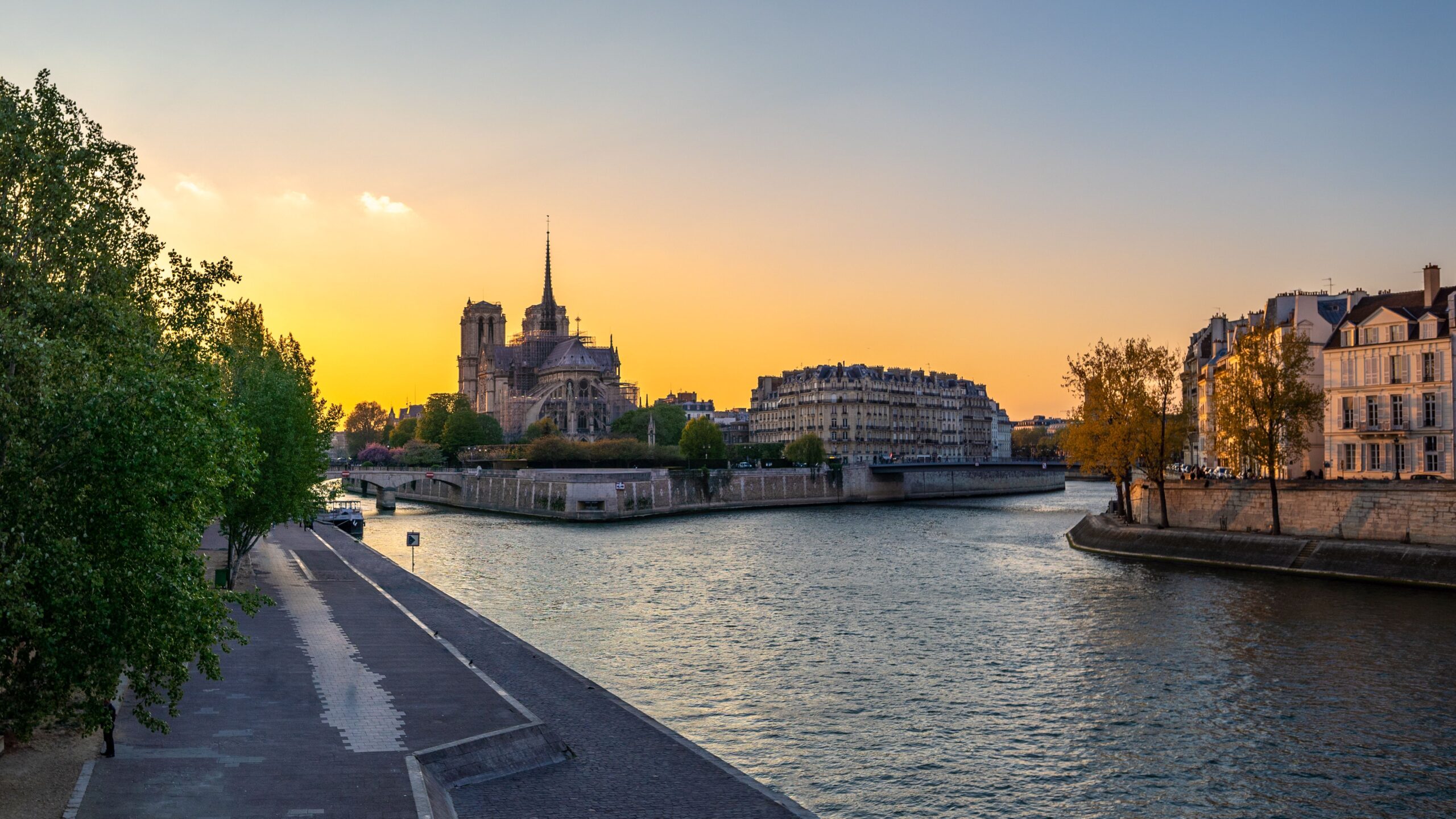
Île de la Cité is where the earliest settlement of Paris took root. Its defensible position in the middle of the Seine made this location ideal. Today, the island is home to some of Paris's most important historic structures. These include Notre-Dame Cathedral, the medieval Sainte-Chapelle, and the Conciergerie. The Conciergerie once served as a royal residence, then later became a prison during the French Revolution. Pont Neuf, the oldest surviving bridge in Paris, also crosses the island's western tip. Together, these landmarks reflect the island's central role in the political, religious, and cultural history of Paris.
The Louvre
The Louvre began as a fortress on the right bank of the Seine in the late 12th century. It later became a royal palace, and eventually the world-famous museum it is today. Its location reflects the river's long-standing importance to Parisian defense, power, and urban development.
Experience the Louvre Museum with the Seine River Cruise
Musée d'Orsay
The Musée d'Orsay began life as the Gare d'Orsay, a railway station on the Left Bank of the Seine. Builders constructed it for the 1900 World's Fair. Today, the former station houses one of the world's most important collections of Impressionist and Post-Impressionist art. This shows how the riverfront evolved from transport hub to cultural landmark.
Experience the Orsay Museum with the Seine River Cruise
The Eiffel Tower
Engineers built the Eiffel Tower beside the Seine as the centerpiece of the 1889 World's Fair. It was designed to showcase France's industrial and engineering achievements. Today, its position near the river makes it one of the most recognizable landmarks from a Seine River Cruise.
Frequently Asked Questions
Why was Paris founded on the Seine specifically?
The river offered natural defense around Île de la Cité, along with a built-in trade route. This made it one of the most practical places to settle in the region.
What role did the Seine play during the French Revolution?
The river itself wasn't central to the Revolution's events. However, its bridges and quays served as major gathering points, since they were already the city's primary public spaces.
How did industrialization change the Seine?
The 19th century turned the river into a hub for transport and manufacturing. Barges and riverside factories replaced much of its earlier role as a medieval trade route.
Why are so many Paris landmarks located directly on the river?
The Seine was historically the city's main trade and transport route. Because of this, builders naturally placed such buildings, from palaces to train stations, along its banks.
What's the best way to see this history today?
A river cruise passes many of the same landmarks discussed here. It offers a single continuous view of a history that otherwise spans centuries.
See the History Up Close
How the Seine Shaped Paris is still visible today. You can trace centuries of that development along the river's banks, from Île de la Cité to the Louvre, Musée d'Orsay, and the Eiffel Tower. A river cruise remains one of the most direct ways to see that history in a single trip.